
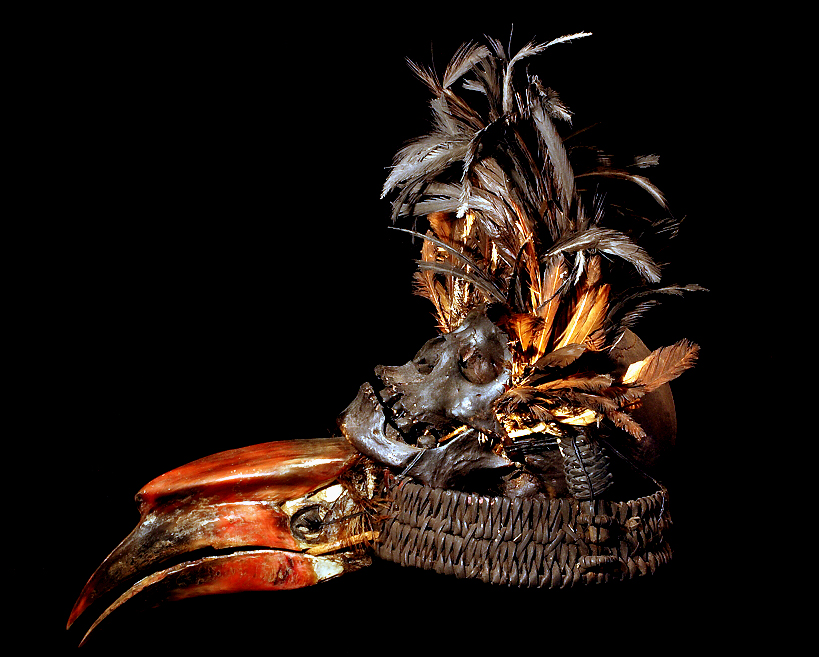
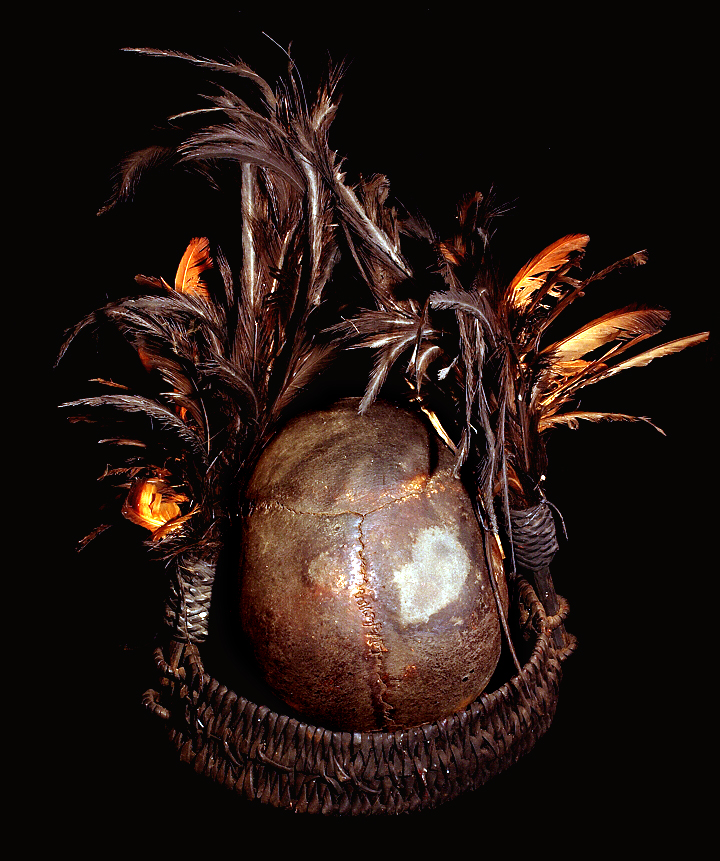
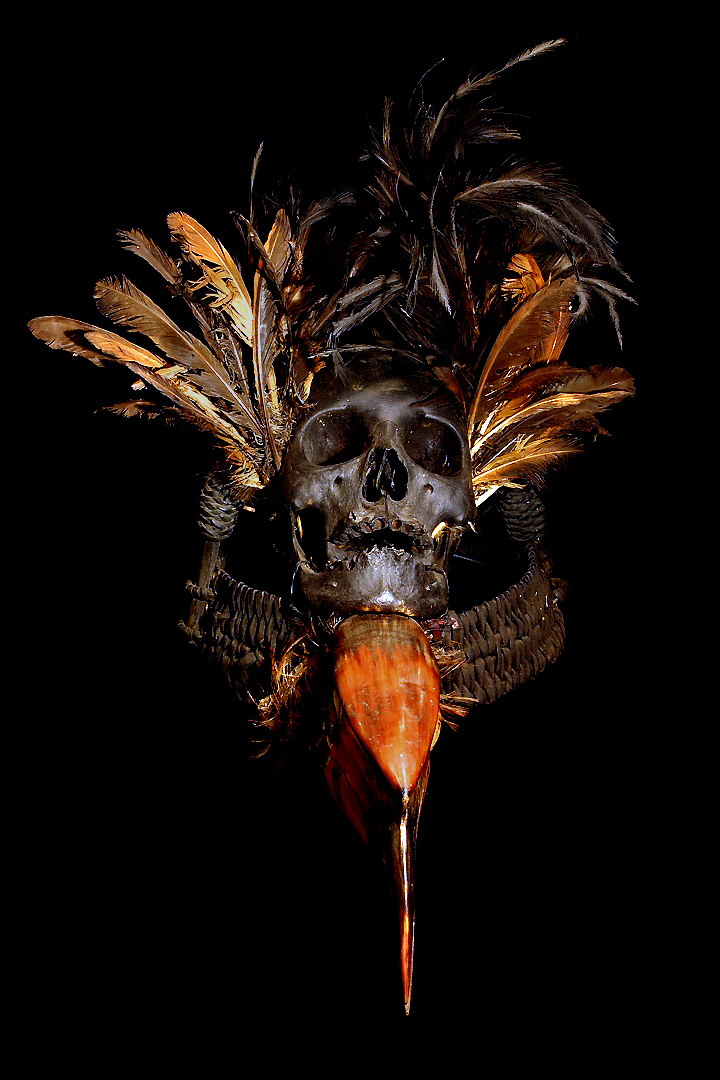
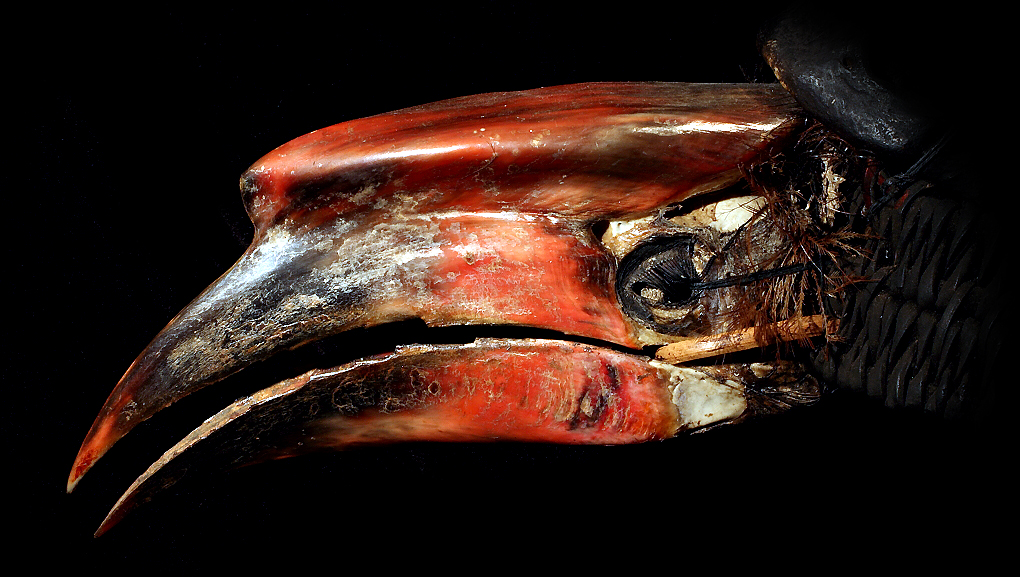
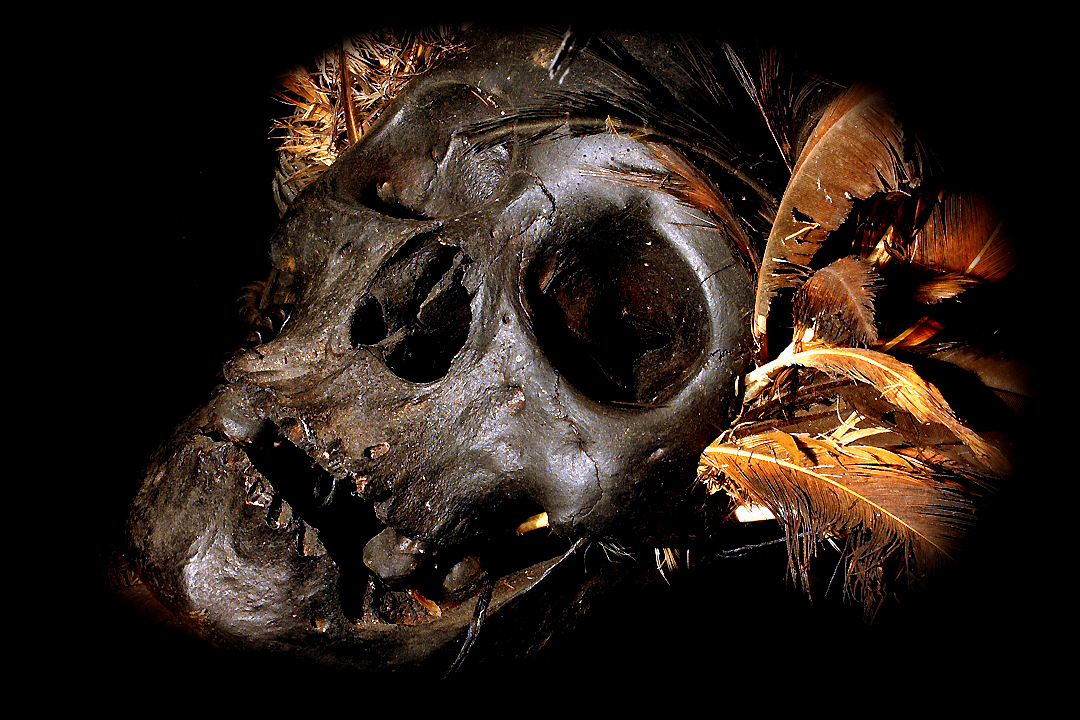
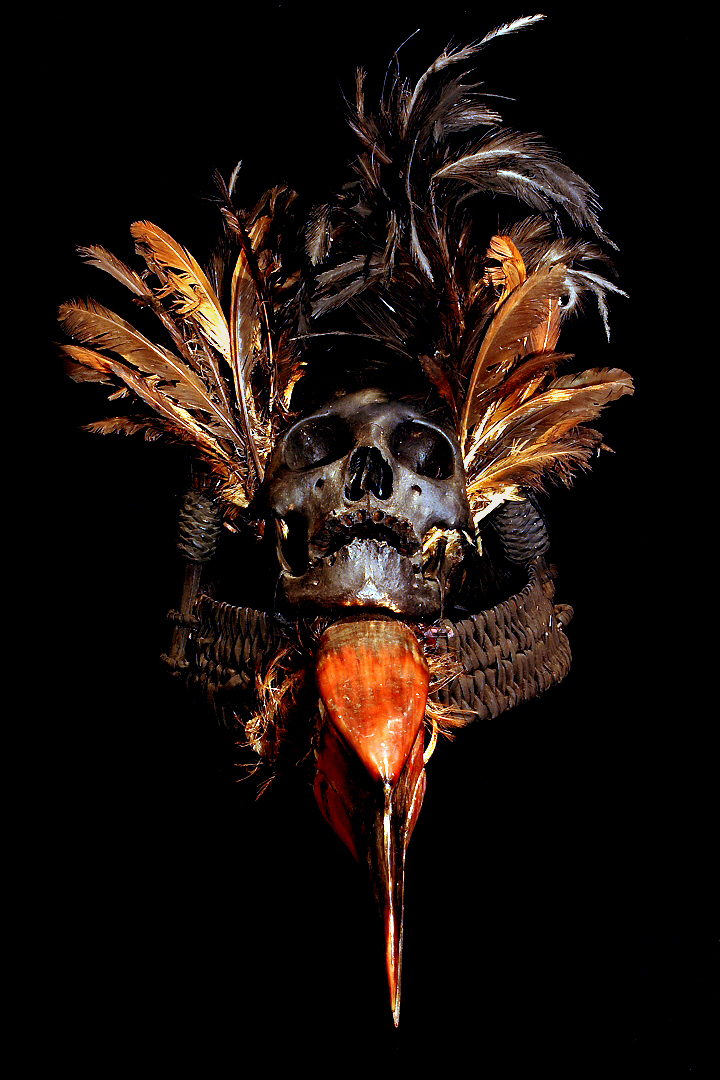
IFUGAO TRIBE: HEAD HUNTED SKULL HAT #2
HUMAN SKULL, BIRD SKULL, WOOD,
WAX, RATTAN, FEATHERS, FIBER
|
FILIPINO HEAD HUNTING HUMAN SKULL HAT #2 |
|
IFUGAO TRIBE: HEAD HUNTED SKULL HAT #2 HUMAN SKULL, BIRD SKULL, WOOD, WAX, RATTAN, FEATHERS, FIBER |
|
Igorot, Iban, Dayak, Berawan, Wana, and Mappurondo tribes. Among these groups, headhunting was usually a ritual activity rather than an act of war or feuding and involved the taking of a single head. Headhunting acted as a catalyst for the cessation of personal and collective mourning for the community's dead. Ideas of manhood and marriage were encompassed in the practice, and the taken heads were highly prized. Other reasons for headhunting included capture of enemies as slaves, looting of valuable properties, intra and inter-ethnic conflicts and territorial expansion. Italian anthropologist and explorer Elio Modigliani visited the headhunting communities in South Nias (an island west of Sumatra) in 1886, and produced an in depth study of their society and beliefs. He found that the main purpose of headhunting was the belief that by owning another person's skull, the victim would serve as a slave of the owner for eternity in the afterlife, and thus human skulls were a valuable commodity. Sporadic headhunting continued in Nias island until very recent times, the last reported incident dating from 1998. Headhunting was practised among Sumba people until the early 20th century. It is done only in a large war parties, not in silence and secrecy like in hunting wild animals. The skulls collected were hung on the skull tree erected in the center of village. As recently as 1998, in Waikabubak, a major clash of clans resulted some people decapitated, reminiscent of the old headhunting tradition. Kenneth George wrote about annual headhunting rituals that he observed among the Mappurondo religious minority, an upland tribe in the southwest part of the Indonesian island of Sulawesi. Actual heads are not taken; instead, surrogate heads are used, in the form of coconuts. The ritual, called pangngae, takes place at the conclusion of the rice-harvesting season. It functions to bring an end to communal mourning for the deceased of the past year; express intercultural tensions and polemics; allow for a display of manhood; distribute communal resources; and resist outside pressures to abandon Mappurondo ways of life. Around the 1930s, headhunting was suppressed among the Ilongot in the Philippines by the US authorities. The Igorot in the Philippines also practiced headhunting. Ifugao culture revolves around rice, which is considered a prestige crop. There is an elaborate and complex array of rice culture feasts inextricably linked with taboos and intricate agricultural rites, from rice cultivation to rice consumption. Harvest season calls for grandiose thanksgiving feasts, while the concluding harvest rites tungo or tungul (the day of rest) entail a strict taboo of any agricultural work. Partaking of the rice wine (bayah), rice cakes, and moma (mixture of several herbs, powdered snail shell and betel nut/arecoline which is used as a chewing gum to the Ifugaos) is an indelible practice during the festivities and ritual activities. Agricultural terracing and farming are the principal means of livelihood. Their social status is measured by the number of rice field granaries, family heirlooms, gold earrings, and carabaos (water buffaloes). Prestige is also conferred through time and tradition. The more affluent, known as kadangyan, were usually generous by nature, giving rice to poor neighbors in time of food shortage(s) and/or hardship(s). Furthermore, their culture was known for their legal system, using one of the world's most extensive oral legal traditions specifying the offense depending on the use of custom law; trial by elders (influenced in part by public opinion); or trial by ordeal. The wealthy were subjected to greater fines than the poor. A village in the Batad rice terraces Untouched by the influences of Spanish colonialism, Ifugao culture values kinship, family ties, religious and cultural beliefs. Ifugao are unique among all ethnic groups in the mountain province for their narrative literature such as the hudhud, an epic dealing with hero ancestors sung in a poetic manner. Also unique to the Ifugao is their woodcarving art, most notably the carved granary guardians bului and the prestige bench of the upper class, the hagabi. Their textiles are renowned for their sheer beauty, colorful blankets and clothing woven on looms. Houses were well-built, characterized as square with wooden floors, windowless walls, and pyramidal thatch roofs. Elevated from the ground by four sturdy tree trunks, they feature removable staircases that were hoisted up at night to prevent entry by enemies or wild animals. Lastly, their attire remain traditional for male Ifugaos, donning the wanno or g-string; there are six types of wanno which are used depending on the occasion or the man's social status. THE IFUGAO TRIBE, FROM THE PHILIPPINES, PLACE HEAD HUNTED HUMAN TROPHY SKULLS OUTSIDE OF THEIR HUTS, AS WELL AS, MOUNT THEM OVER THEIR HEARTHS INSIDE OF THEIR HOMES. IT IS EXTREMELY RARE TO FIND A HAT DECORATED IN A HUMAN SKULL OF A HEAD HUNTED VICTIM! THE DAYAK, IFUGAO, AND NAGA HUMAN SKULLS ARE HEAD HUNTING TROPHIES. THE ASMAT "ANCESTOR" SKULLS. THE DIFFERENCE IS; HEAD HUNTED SKULLS ARE ACQUIRED FROM ENEMY ANCESTOR SKULLS ARE COLLECTED AND VENERATED TO REMEMBER DECEASED FAMILY MEMBERS. THE IFUGAO COLLECT BONES OF DEAD RELATIVES; WRAP THEM IN TRIBAL TEXTILES, AND STORE THEM IN THE RAFTERS UNDER THEIR HUTS. HUMAN SKULLS AND SKULL CAPS FROM NEPAL ARE RITUAL OFFERTORY VESSELS THAT ARE USED AS DRINKING CUPS IN TIBETAN BUDDHIST CEREMONIES. |
| |